 Peruvian Pot
Andes
High in the mountains where potatoes were first cultivated, Andean cuisine is hearty, soulful, and rooted in Inca tradition. Purple potatoes, quinoa, and slow-cooked stews reflect thousands of years of agricultural ingenuity.
11 recipes
Signature Ingredients
Native Potatoes
Peru grows over 3,000 potato varieties in every color imaginable. The birthplace of the potato still celebrates it like nowhere else.
Quinoa
The 'mother grain' of the Incas, packed with protein and cultivated above 3,500 meters for over 5,000 years.
Aji Panca
A mild, dark-red dried pepper with berry-like sweetness. It's the workhorse of Andean sauces and stews.
Cuy
Guinea pig has been a prized Andean protein for millennia. Roasted whole over open flames, it's crispy, rich, and deeply traditional.
Huacatay
Black mint, an Andean herb with a unique flavor between mint, basil, and tarragon. Essential in ocopa sauce and pachamanca.
Culinary Traditions
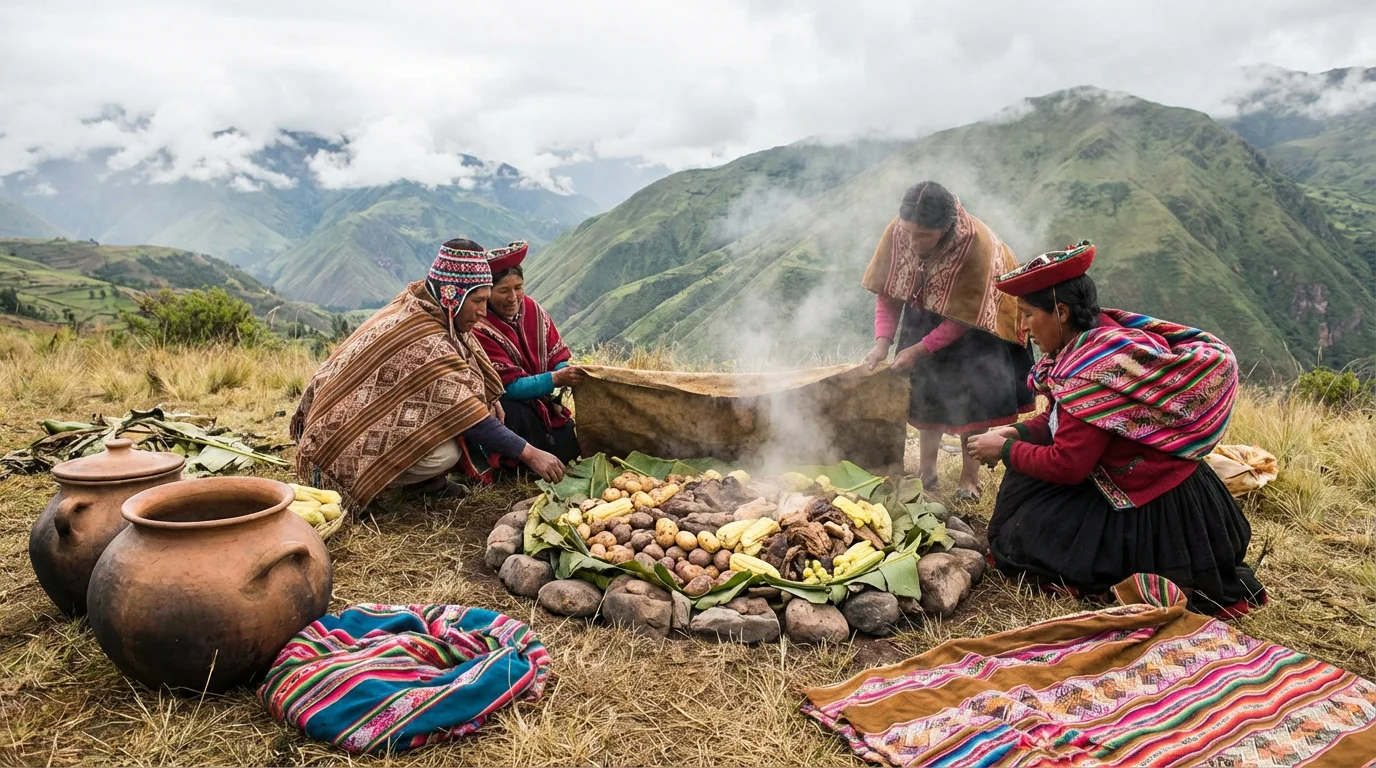
Andean cuisine is the oldest living culinary tradition in the Americas. High in the mountains where the Inca Empire once stretched across a continent, communities still cook using techniques that predate European contact by thousands of years. Pachamanca — meat and vegetables slow-cooked underground with heated stones — connects today's cooks directly to their ancestors.
The Andes are also the birthplace of ingredients that changed the world. Potatoes, quinoa, and dozens of grain and tuber varieties were first domesticated here. At altitudes above 4,000 meters, Andean cooks invented freeze-drying — chuño, or naturally dehydrated potatoes — centuries before modern technology. This ingenuity born of necessity continues to shape one of South America's most soulful cuisines.
Recipes from the Andes
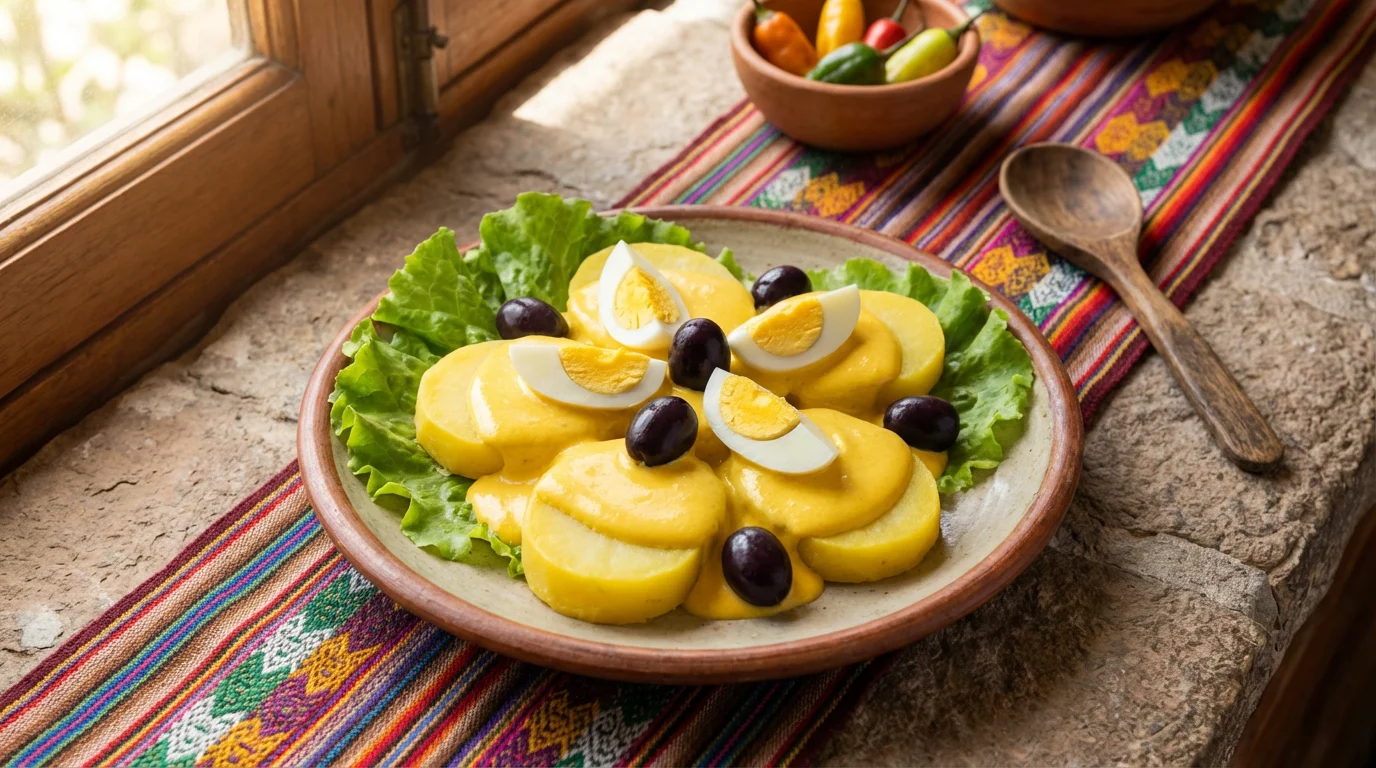
Papa a la Huancaína
Boiled yellow potatoes draped in a creamy, spicy cheese sauce made with aji amarillo peppers. A classic Andean appetizer served cold on a bed of lettuce.
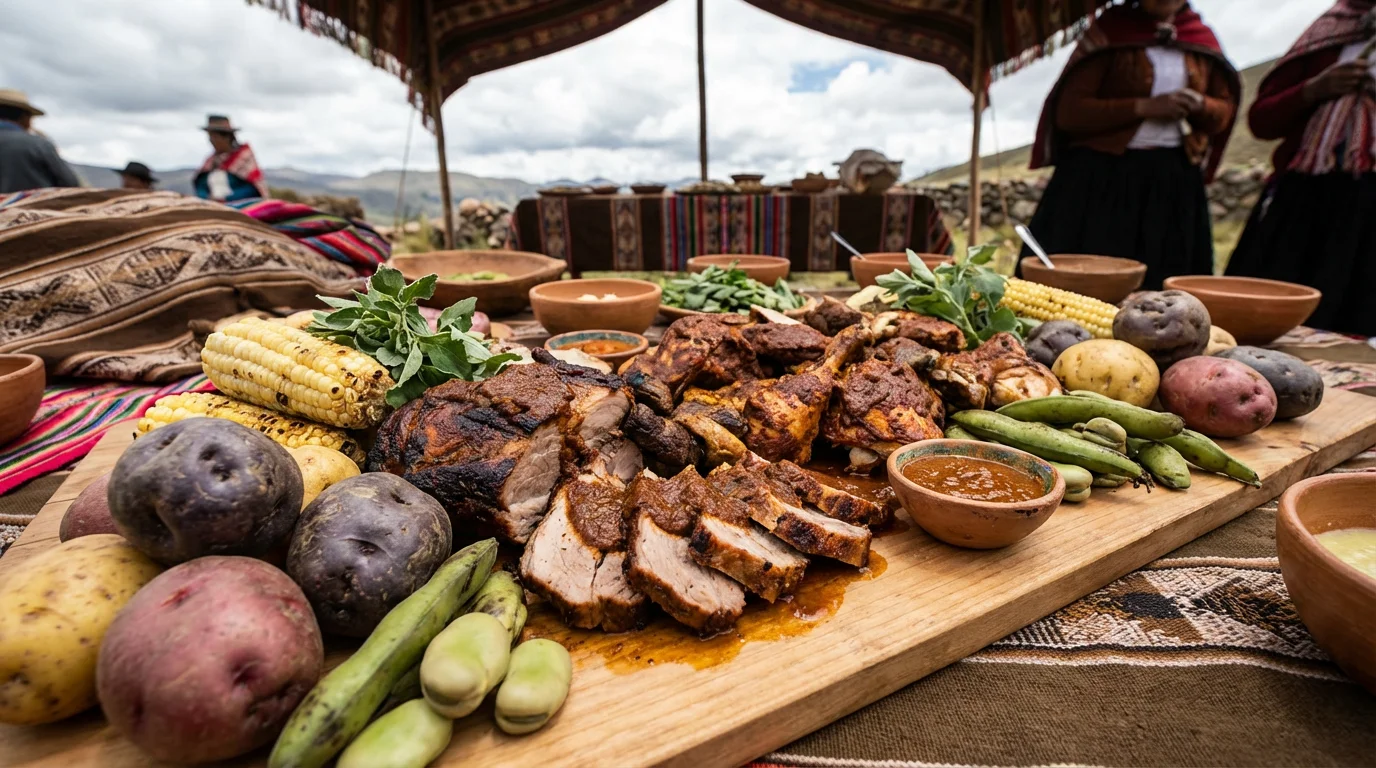
Pachamanca
An ancient Andean feast where meats, potatoes, corn, and fava beans are slow-cooked underground on hot stones. The name means 'earth pot' in Quechua.
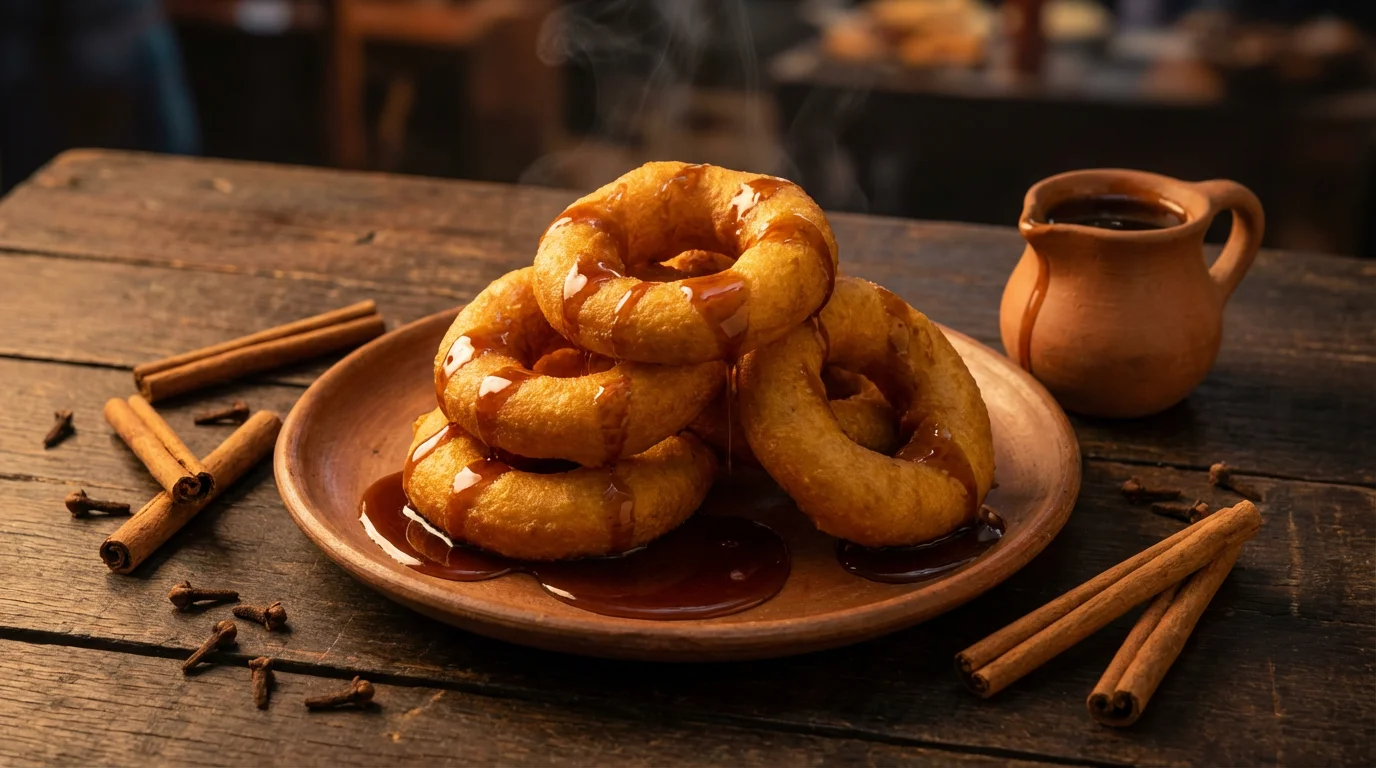
Picarones
Peruvian doughnuts made from sweet potato and squash dough, deep-fried into golden rings and drizzled with warm chancaca (raw cane sugar) syrup.
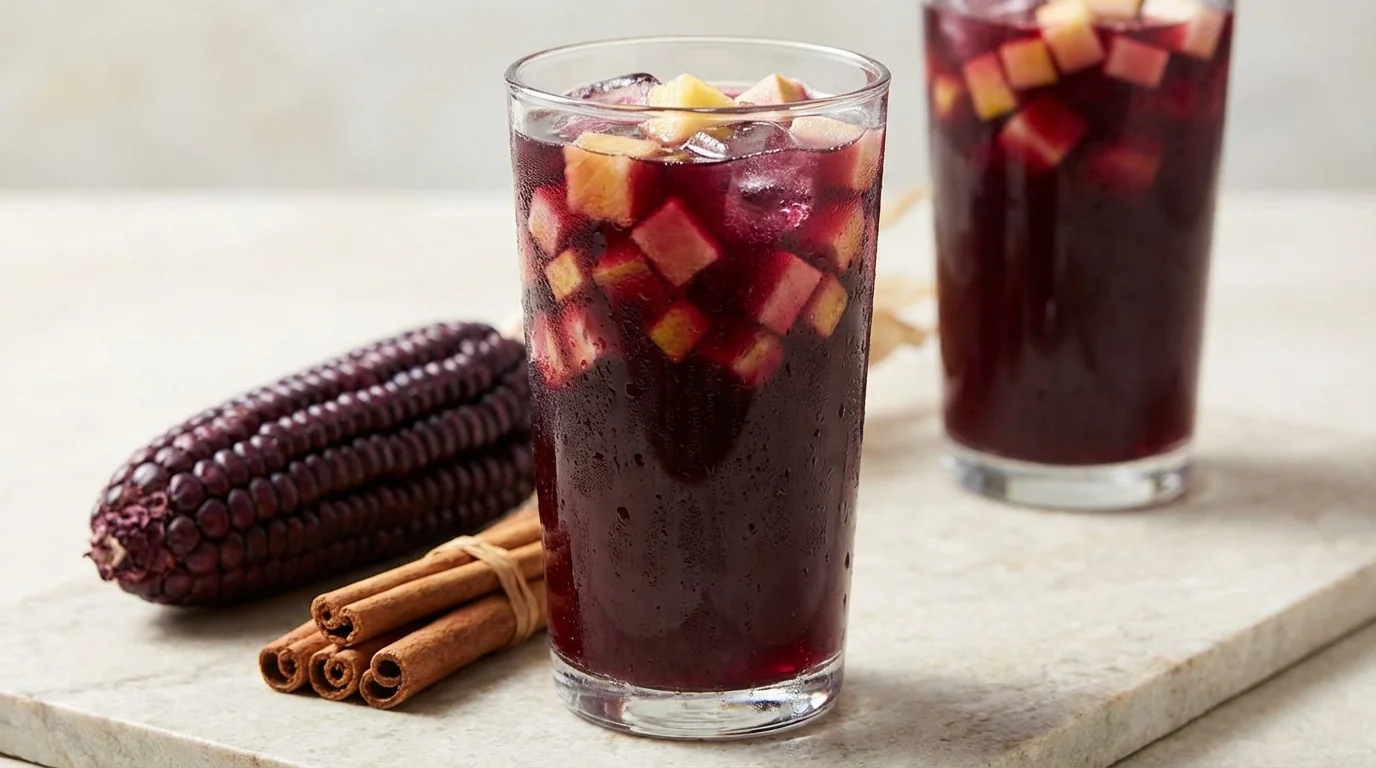
Chicha Morada
A beloved Peruvian purple corn drink simmered with pineapple, cinnamon, cloves, and apple, then sweetened and brightened with lime juice. Refreshing and packed with antioxidants.
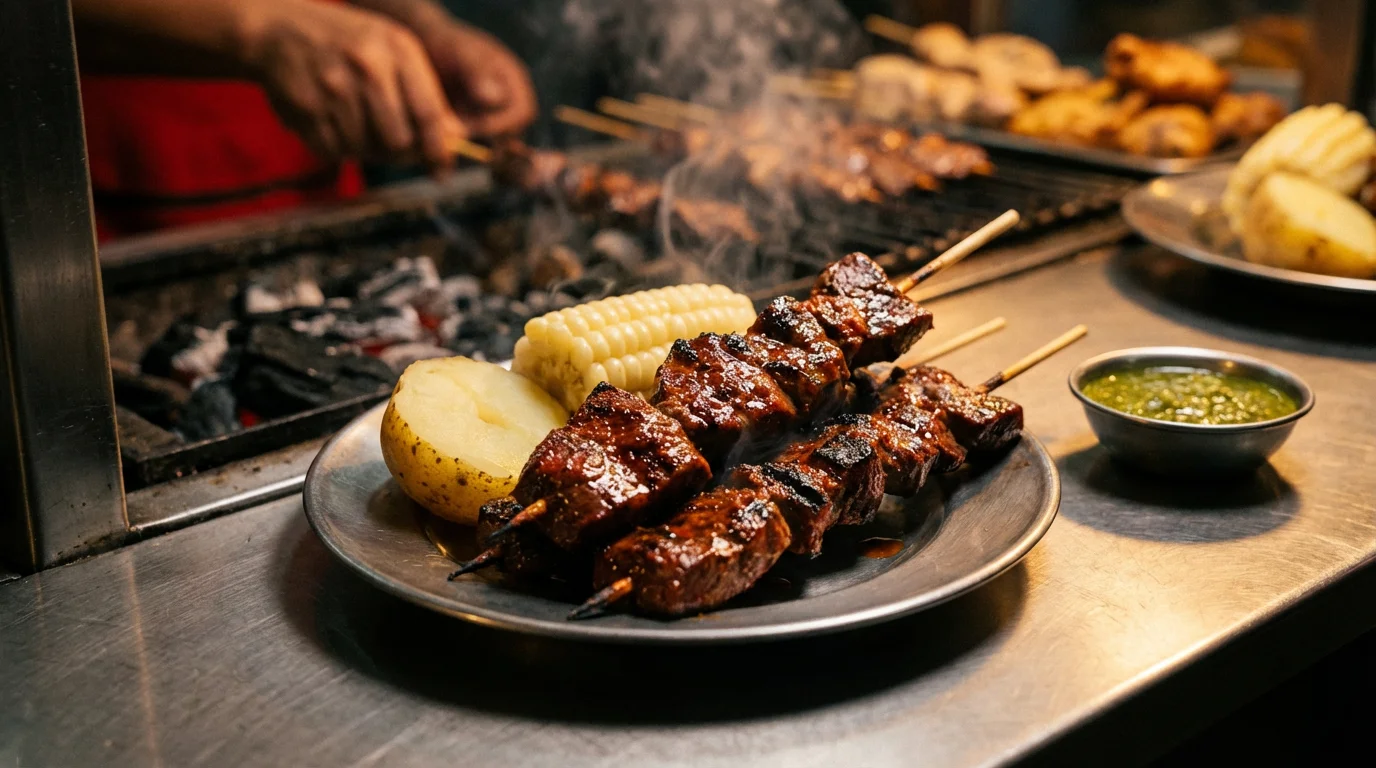
Anticuchos de Corazón
Peru's most famous street food. Tender beef heart marinated in ají panca, vinegar, cumin, and garlic, grilled on skewers until smoky and charred. A tradition that dates back to colonial times.
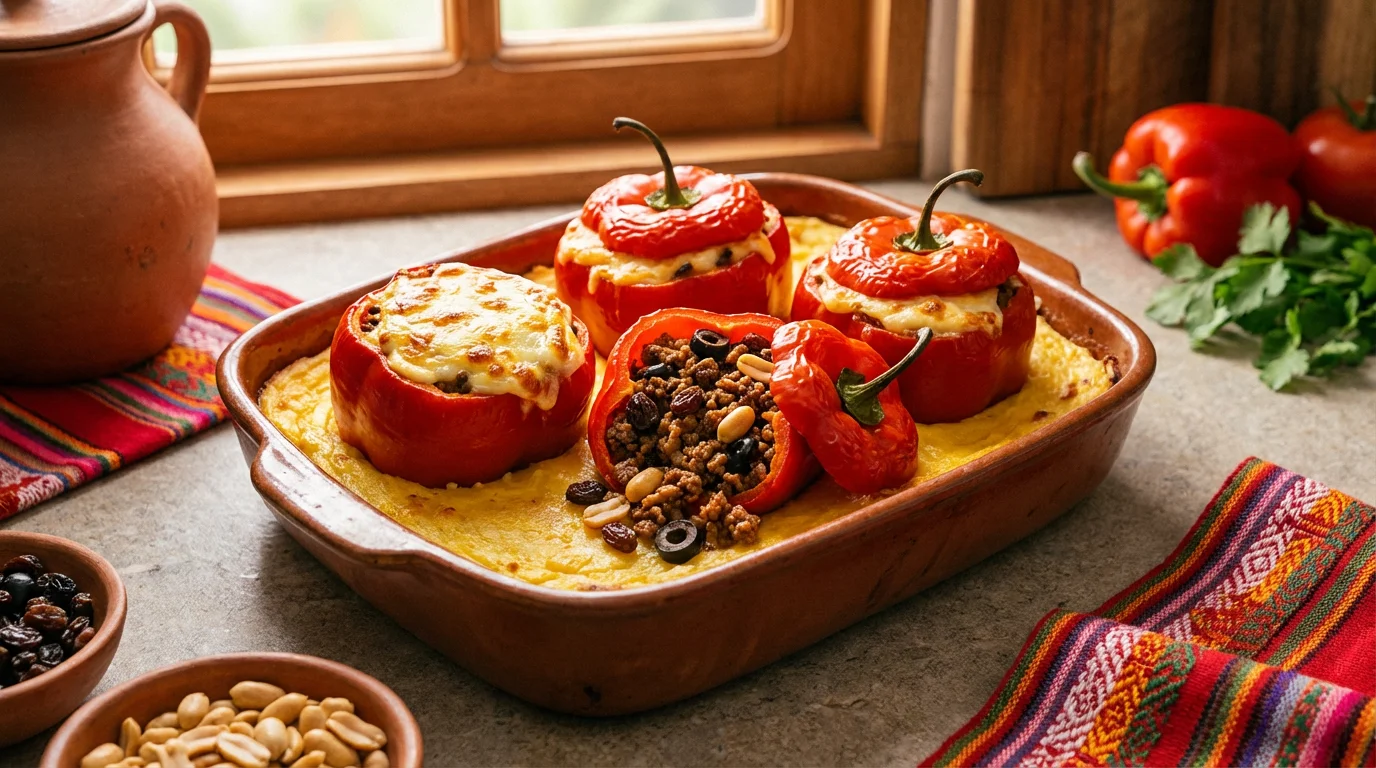
Rocoto Relleno
Arequipa's signature dish. Fiery rocoto peppers stuffed with a savory filling of ground beef, peanuts, olives, and hard-boiled egg, topped with melted cheese and baked in an egg custard.
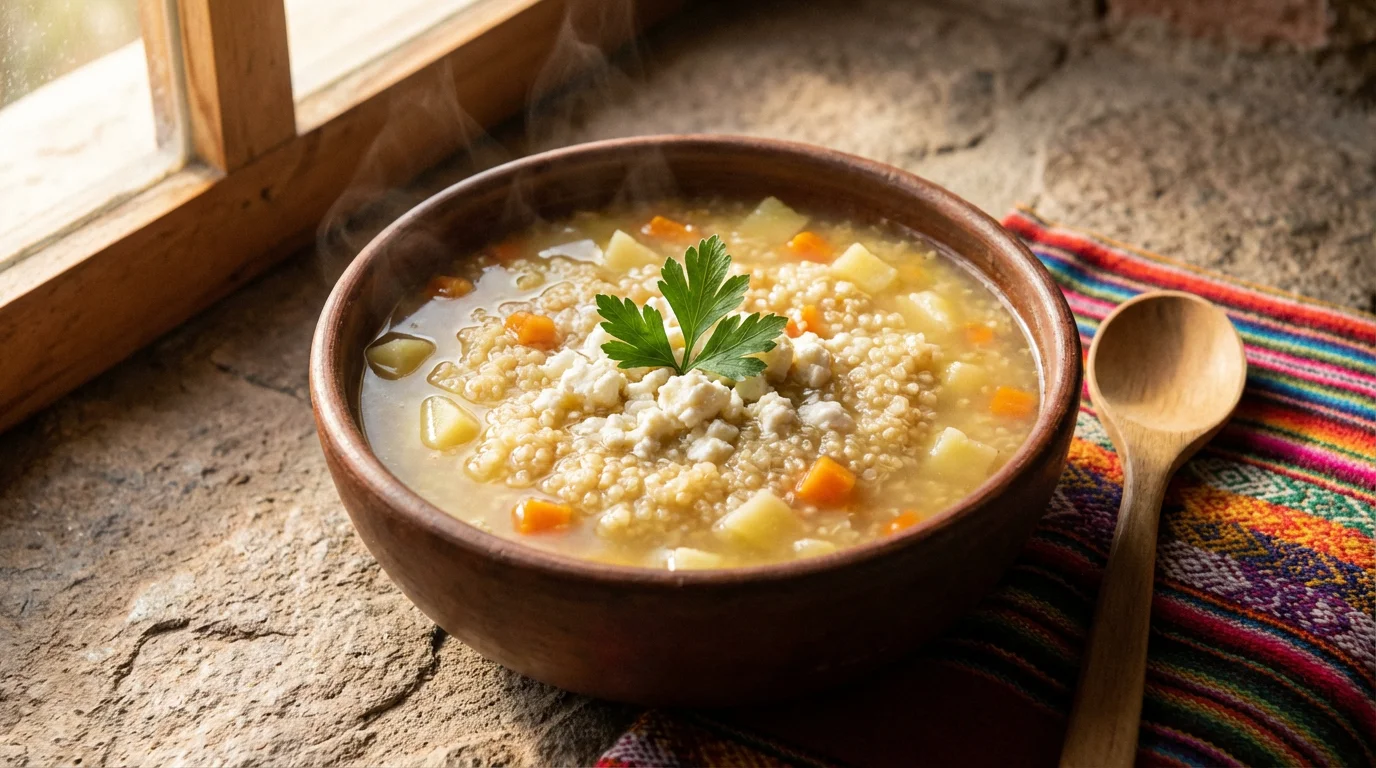
Sopa de Quinua
A nourishing Andean soup that has sustained highland communities for millennia. Fluffy quinoa simmered with potatoes, vegetables, and herbs in a light broth, finished with crumbled fresh cheese.
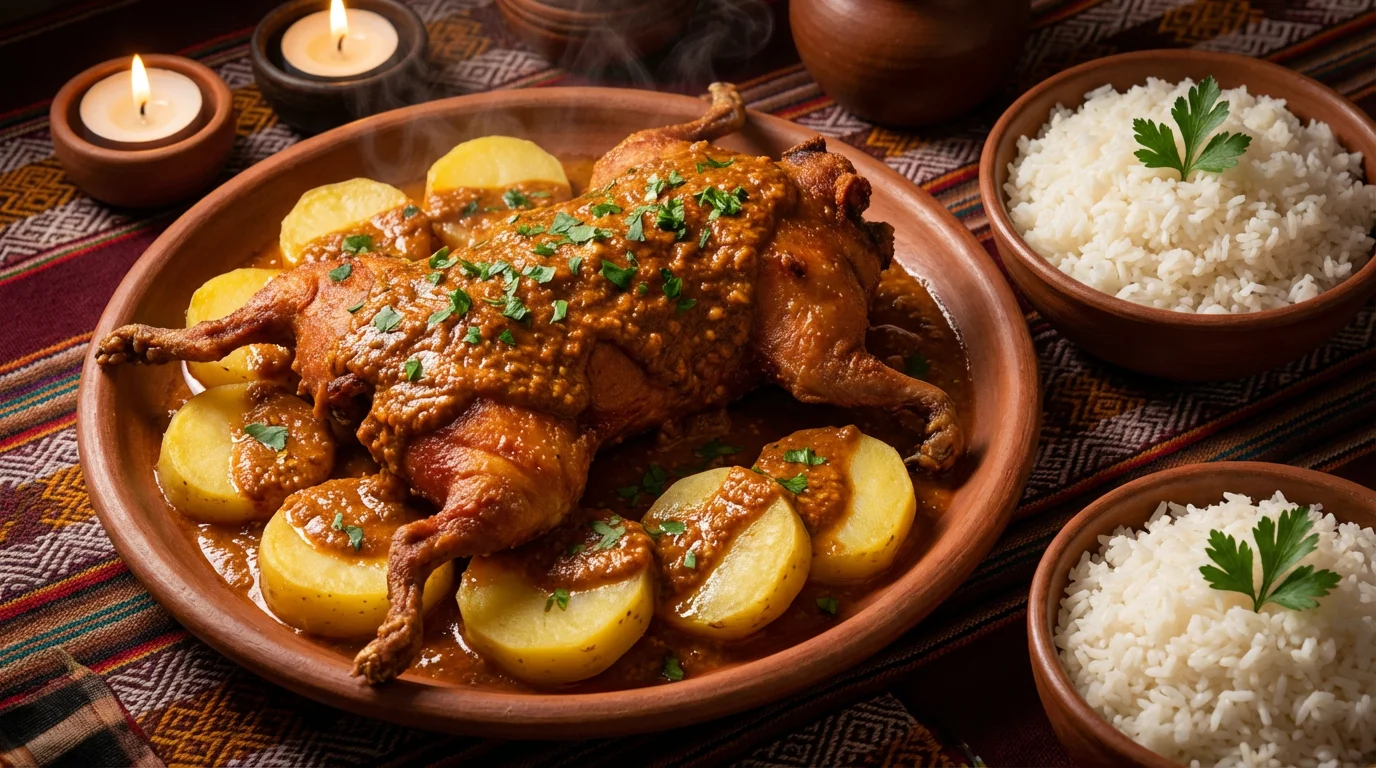
Picante de Cuy
Huánuco's pride — whole guinea pig fried until the skin shatters with crispiness, then drenched in a rich, fiery sauce of aji panca, toasted peanuts, and garlic. A celebratory dish served at festivals and family gatherings throughout the central Andes, with golden potatoes soaking up every drop of sauce.
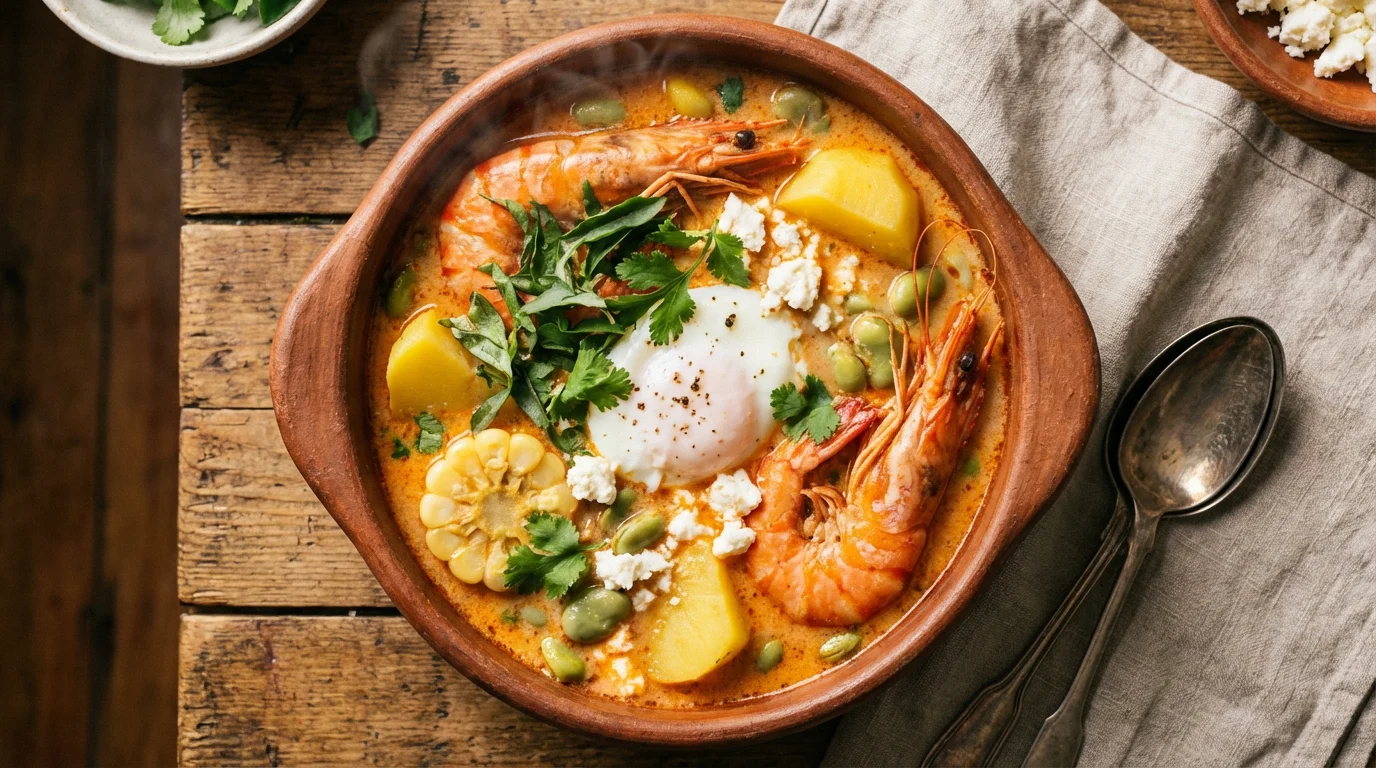
Chupe de Camarones
Arequipa's legendary shrimp chowder — a rich, creamy soup loaded with whole river shrimp, potatoes, corn, fava beans, rice, fresh cheese, and a poached egg. The pride of southern Peru and one of its most comforting dishes.
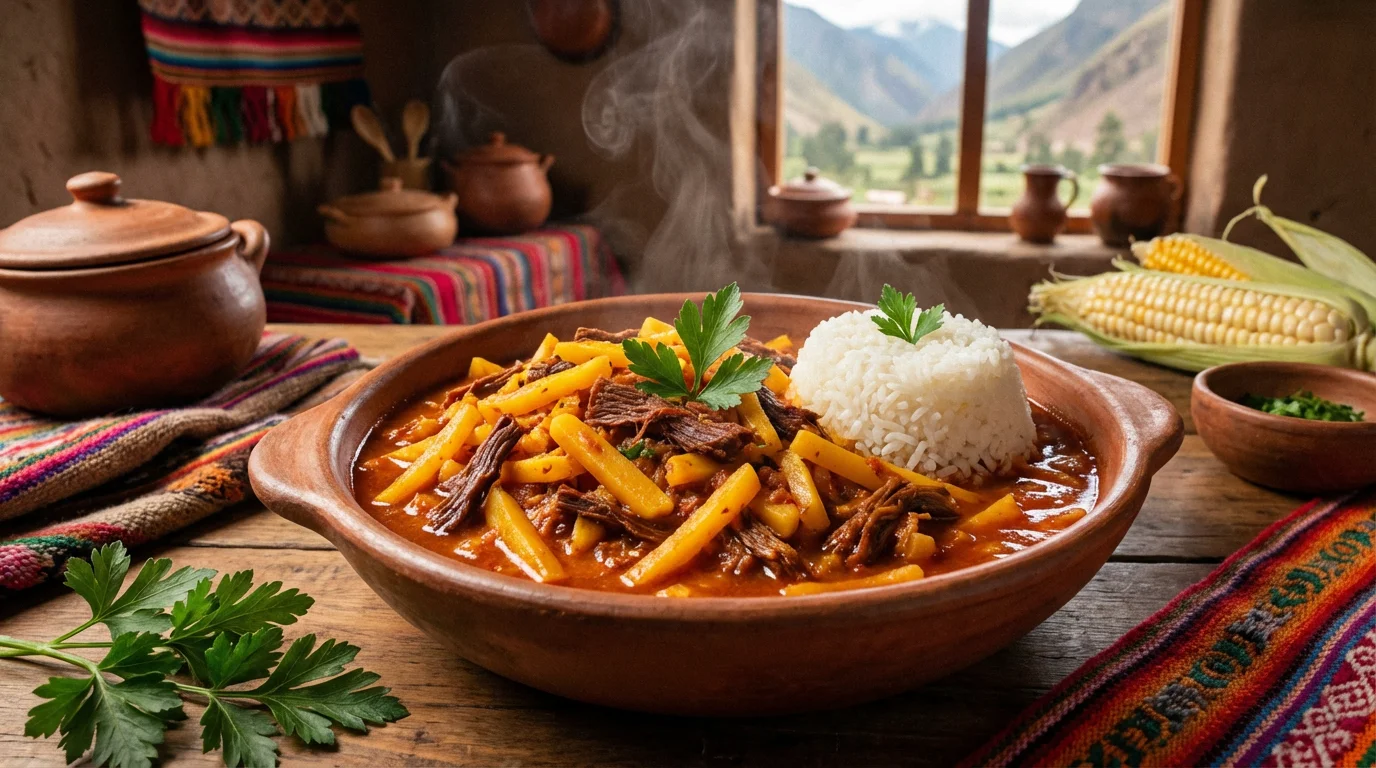
Olluquito con Charqui
A deeply traditional Andean stew of julienned olluco tubers cooked with charqui (dried llama or beef jerky). This ancient pre-Columbian dish showcases Peru's incredible native potato diversity and the highland art of preserving meat.
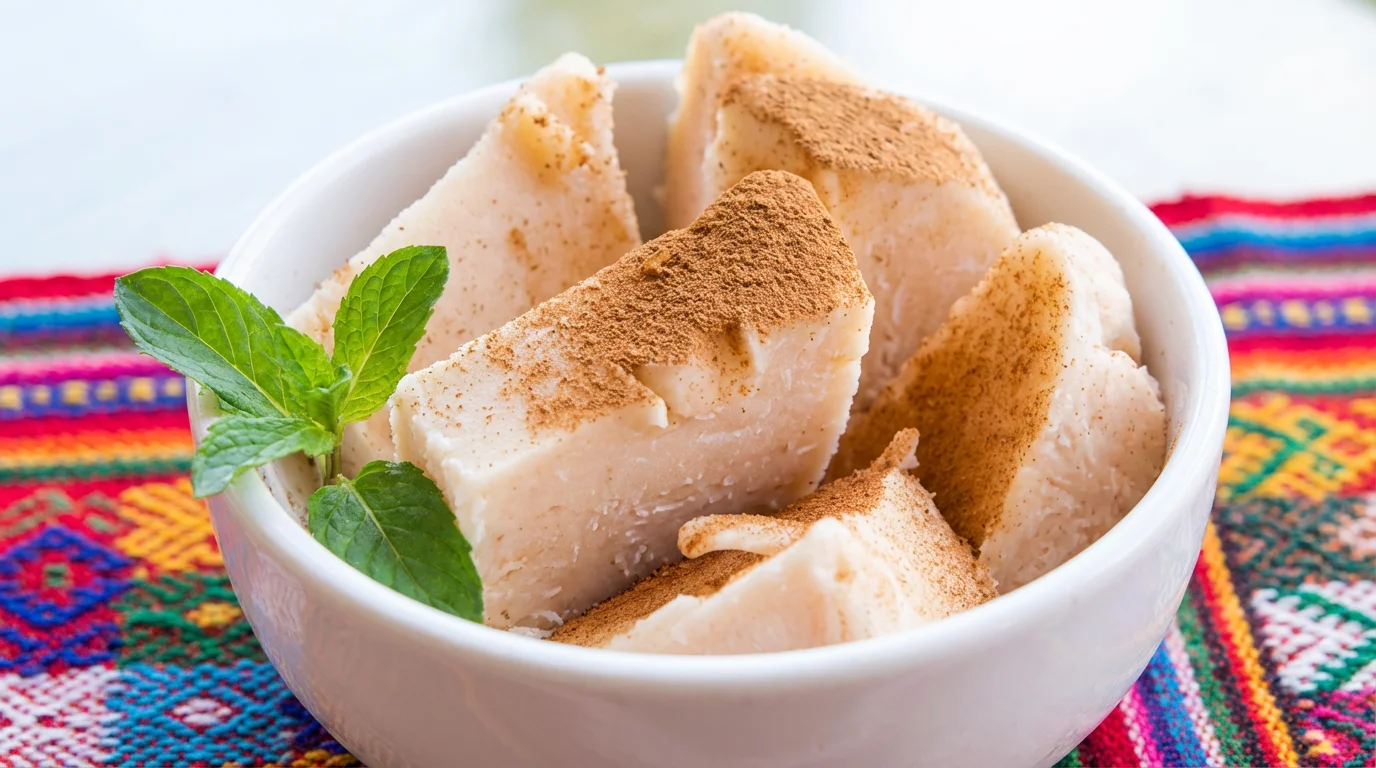
Queso Helado
Arequipa's beloved frozen dessert — named 'frozen cheese' not for its ingredients but because it's traditionally served in slices and blocks that resemble fresh cheese. Made from milk, coconut, and cinnamon, hand-churned in a copper pot set in ice and salt. Refreshing, aromatic, and unmistakably Andean.